
New Construction vs Resale in Orlando: 3 Things to Compare
New Construction vs Resale in Orlando: 3 Things to Compare Before You Decide
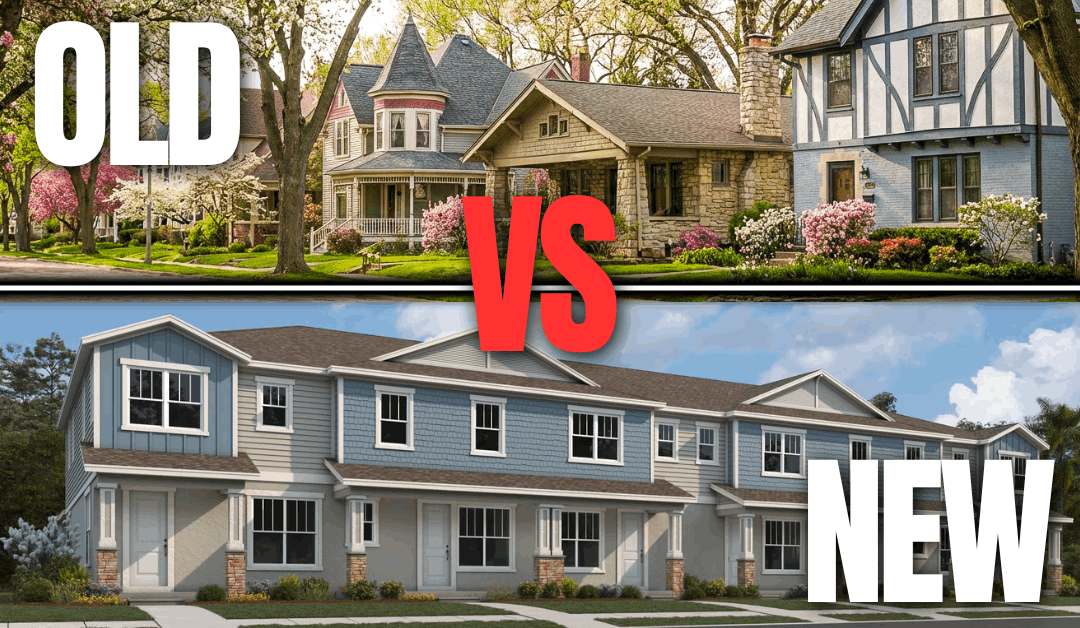
Most buyers relocating to Orlando arrive with the decision already half-made. Either they've fallen for the idea of a brand-new home no one has ever lived in, or they've decided new construction is overpriced and a resale in an established neighborhood is the smarter play. Both camps are usually missing a few variables that could either change their mind or — at minimum — make them more confident they're going in the right direction.
After five years of working with relocating buyers in Central Florida, here are the three comparisons that matter most — and two real-world examples that show exactly how the numbers play out in Clermont and Horizon West right now.
When choosing between new construction and resale in Orlando, the three factors most buyers overlook are lot size and neighborhood feel, CDD fees (which add $1,500–$3,000/year in many new communities), and homeowner's insurance costs — which are significantly lower on new builds. Builder rate incentives can also close a $100K price gap to nearly nothing on a monthly payment basis, making the true cost comparison less obvious than the listing price suggests.
The part everyone starts with — and why it's not enough
Area, schools, commute, lifestyle — those are rightfully the first filters. But within any given area in Central Florida, whether you go new construction or resale shapes your experience more than most buyers expect going in.
One of the less-discussed differences is lot size. Older resale communities in Central Florida tend to have more space between homes. Before master-planned communities like Horizon West and Lake Nona existed, neighborhoods were built on larger lots with more separation between neighbors. Most new construction today — especially in master-planned communities — runs on 50-foot-wide lots that go 125 feet deep. The bungalow-style homes with rear-load garages are even tighter on the sides.
That's not inherently bad. But if you're coming from a suburb where your backyard doesn't look directly into your neighbor's kitchen window, it's worth knowing before you fall in love with a floor plan.
There's also the emotional dimension of resale that doesn't show up in any spreadsheet. Driving into an established neighborhood with mature trees canopying the street, homes with distinct character, neighbors who've lived there for years — that feeling is real, and for some buyers it matters more than a fresh build. Some areas in Central Florida, like College Park and Winter Park, offer a middle path: brand-new construction in the middle of a charming, established neighborhood. If that's available in your target area, it's worth exploring before defaulting to a master-planned community.
The financial comparison most buyers skip: CDD fees
New construction communities in Central Florida frequently carry a CDD fee — Community Development District — on top of standard property taxes. It shows up as a non-ad valorem assessment on your tax bill and typically runs between $1,500 and $3,000 per year in this market.
The fee has two components: repayment of the bond used to finance the community's infrastructure, and an ongoing operations and maintenance assessment. Both are part of your annual cost of ownership whether you think about them or not.
Where this gets consequential is when you're comparing two homes at similar price points — one new construction with a CDD, one resale without. The monthly obligation isn't the same even if the mortgage payment looks identical. And because lenders factor taxes into your total payment, a CDD can also affect your purchasing power — meaning it could limit how much home you qualify for, not just how much you spend each month. Always ask whether a community has a CDD before you run payment comparisons.
The comparison almost nobody makes: homeowner's insurance
Florida's insurance market is brutal right now. That's not new information. What is underappreciated is how dramatically the age of a home affects the premium.
On brand-new construction, it's not unusual to see homeowner's insurance in the $1,600 to $2,100 per year range. On a home built in the 1980s, 1990s, or even early 2000s, that same coverage can cost two to three times as much — sometimes more depending on the roof age, construction type, and claims history in that ZIP code.
When you're comparing a new construction home to a resale that's fifteen or twenty years older, get actual insurance quotes for both before you decide. It's one of the most underrated financial advantages of buying new in Florida, and it's often enough to shift the true monthly cost comparison in a direction buyers don't expect.
A real example: Clermont, same area, $100K apart in price
Here's where the numbers stop being theoretical. Looking at two homes in the Wellness Way corridor — one new construction at Parkside Trails by Pulte listed around $670,000, one resale in a nearby Lennar community at $569,000, four bedrooms, built in 2024.
On the surface, the resale looks like an obvious win. It's $100,000 less. But Pulte was offering a 30-year fixed FHA rate at 4.25% as a builder incentive at the time of this comparison. Running both through a standard mortgage calculator with 10% down:
Price: ~$670,000
Down: 10% ($67,000)
Rate: 4.25% (builder incentive)
Est. monthly payment: ~$3,050
Price: ~$569,000
Down: 10% ($57,000)
Rate: 6.2% (market rate)
Est. monthly payment: ~$3,055
A $100,000 difference in purchase price — nearly identical monthly payment. That's the lever builders use when market rates are elevated. They pre-buy mortgage points in bulk and pass them to buyers as rate incentives, something a private seller can't replicate. It doesn't make new construction the automatic answer, but it does mean the sticker price comparison alone is misleading.
A second example: Horizon West, where the gap narrows even further
In Horizon West's Ovation community, the same exercise looked like this: a new construction home listed at $643,000, and the identical resale floor plan in the same community asking $630,000 — built in 2025. Only a $13,000 price difference.
When you factor in the builder's closing cost incentives and rate buydown on the new construction side, the resale at $630,000 at market rate ends up costing more per month than the new construction at $643,000 with incentives applied. In this scenario, most buyers would agree without much debate — the new build wins on the actual numbers.
The point isn't that new construction is always the answer. It's that the comparison has to go deeper than listing price, and most buyers never run it all the way through.
Three principles to apply before you decide
First, if you're leaning toward new construction, look at resale options within the same general area before you commit. You may find a comparable home at a better price with no CDD, especially if the community is only a few years old and the original owners are ready to move on.
Second, always check whether the community — new or resale — carries a CDD. It affects your monthly payment and your purchasing power, and it's often buried in the fine print until closing.
Third, if you're comparing a new build to an older resale at a similar price, get a homeowner's insurance quote on both. In Florida's current insurance environment, the difference in annual premium alone can be the deciding factor.
Working through this decision for a Central Florida move? I run these comparisons with clients regularly — pulling the actual numbers side by side so the choice is based on total cost, not just listing price. Reach out at info@orlandowithmario.com and we'll map out what the real comparison looks like for your situation.
Recent Posts