Is Orlando the Best City in America? An Honest 2026 Guide From a Local Real Estate Agent
TL;DR — Is Orlando actually a great city to live in?
As of 2026, Orlando is the #1 fastest-growing major metro in the United States by job growth, population growth, and GDP growth — a triple crown no other large U.S. region currently holds. The metro now has nearly 3 million residents, added 37,690 new residents in 2025 alone (about 725 per week), and continues to lead Florida in job creation despite a challenging national environment.
But growth has costs. Orlando has real, honest challenges: an economy still heavily weighted toward tourism and hospitality (with the wage problems that come with it), infrastructure that's struggling to keep up with population growth, and a transit system that lags behind every other top-30 metro. This guide is an Orlando real estate agent's honest take — what's working, what isn't, and what's coming.
Why I'm writing this from a real estate agent's perspective
I moved to Orlando from Jamaica in 2019. I've now sold homes here for years, walked clients through neighborhoods from Clermont to Lake Nona to downtown to Winter Park, and watched the metro change in real time. I love this city. I also think loving a place means being honest about it — the good and the genuinely frustrating.
If you're considering moving to Orlando, you've probably read the marketing version: theme parks, sunshine, no state income tax, growing economy. You've also probably read the hate version: "Orlando is overrated," "the wages are terrible," "the traffic is awful." The truth, like most truths, sits in between. Here's the version I'd give a friend who asked me directly.
How big is Orlando, really?
What is Orlando's population in 2026?
The Orlando metropolitan statistical area (MSA) reached approximately 2,957,672 residents at mid-year 2025, and is on track to cross 3 million in 2026. The Orlando MSA covers four counties: Orange, Osceola, Lake, and Seminole.
The City of Orlando itself (just the central city) has a population of about 348,000. When most people say "Orlando," they mean the broader metro — which includes everywhere from Clermont in the west to Lake Nona in the east, Sanford in the north to Kissimmee in the south.
How fast is Orlando growing?
Fast. Even after a national slowdown in international migration, Orlando added approximately 37,690 new residents in 2025 (about 725 per week), and 76,000 in 2024 (about 1,500 per week). Since the 2020 Census, Orlando has gained 284,300+ new residents — enough to fill Camping World Stadium more than four times over.
For context: Orlando is the 20th most populous metro in the U.S., but it's growing faster than nearly every metro larger than it. Only Texas metros (Austin, Houston, Dallas, San Antonio) and Charlotte are currently keeping pace.
Who is moving to Orlando?
Orlando skews young and educated. The median age is 35.3, and more than 4 in 10 adults have a college degree. Roughly 48% of residents are between 25 and 54 — prime working age. Only 11.8% are 65+, which is lower than Florida overall and dispels the stereotype that Orlando is dominated by retirees.
Migration patterns: significant inbound from California, New York, Washington DC, and from within Florida (especially South Florida buyers priced out of Miami).
Is Orlando a good city to live in?
The honest answer: Orlando is a great city if it fits your specific situation. It's not universally the best place for everyone. Here's where it shines and where it struggles.
What Orlando does well
- Job growth. #1 in the U.S. among large metros — 8,800 jobs added in 2025 alone
- Population momentum. #1 fastest-growing major metro
- GDP growth. #1 in nominal GDP growth among the 30 most populous regions
- No state income tax. Real impact on take-home pay, especially for higher earners
- Diverse real estate landscape. Living in Clermont feels nothing like Lake Nona, which feels nothing like Winter Park or downtown. You can find a community that actually matches your lifestyle.
- Food scene. Recently named one of the best food cities in America. Winter Park alone has multiple Michelin-starred restaurants.
- Sports and culture. Multiple major venues, the Dr. Phillips Center, year-round festivals, recently named the best city to host sporting events
- Airport access. Orlando International (MCO) had a $3+ billion investment in Terminal C, making it one of the most modern major airports in the country
- Brightline rail connection. Direct high-speed rail to Miami — a real game-changer for travel
- Theme parks and tourism infrastructure. If "weekends at Disney" is part of your dream, you're literally in the global capital
Where Orlando struggles
- Wages in dominant industries. Leisure and hospitality is Orlando's #1 employment category, and historically it has not paid livable wages relative to housing costs. This is the single most-cited problem by people who move here and don't enjoy it.
- Car dependency. Orlando is built around cars. Public transit (LYNX, SunRail) exists but is limited compared to peer metros. Walkable neighborhoods are concentrated in specific pockets (Winter Park, downtown, parts of Lake Nona).
- Infrastructure lagging growth. Roads, schools, and services are constantly playing catch-up. There are billions of dollars in active road projects across Central Florida — necessary, but slow.
- Traffic. I-4 is notoriously frustrating. Beltway and SR-417 work, but peak hours add real time to commutes everywhere.
- Heat and humidity. Florida summers are intense. May through September is genuinely uncomfortable outside.
- Hurricane season. Real threat, real insurance implications, real cost of homeownership impact
- Insurance costs. Florida home insurance is among the most expensive in the country. Older homes face strict roof-age and wind-mitigation requirements.
Is the Orlando economy too dependent on tourism?
This is one of the most legitimate critiques of Orlando, and it's worth taking seriously.
Of Orlando's top 50 employers, roughly 11 are in leisure and hospitality. Walt Disney World alone employs about 75,000 people across Central Florida. That's an enormous concentration in a single industry — and tourism is historically vulnerable to recessions, pandemics, and consumer-spending pullbacks.
The good news: Orlando's economy is diversifying. AdventHealth is now the metro's second-largest employer. Lockheed Martin and other defense contractors have major Central Florida operations. Companies are relocating here for tech, aerospace, and medical research. Lake Nona's Medical City is a serious cluster of healthcare innovation. The Orlando Economic Partnership (OEP) is actively pushing diversification through its Orlando 2045 initiative.
For someone considering a move: if your career is in healthcare, defense, tech, aerospace, or remote work, Orlando is increasingly attractive. If your career is in lower-paying hospitality roles, the wage-to-cost-of-living math is harder than it looks from the outside.
Is Orlando affordable?
Is Orlando affordable compared to other growing metros?
Yes, relative to peer growth metros. Orlando is significantly more affordable than Austin, Miami, or coastal California, and remains more affordable than Tampa or much of South Florida. Buyers moving from California, New York, DC, and Miami consistently find their dollar stretches further here.
Is Orlando affordable compared to its own history?
No. Home prices, rents, and insurance costs have all risen dramatically since 2020. The Orlando market currently sits around 8,600 active listings — close to pre-pandemic norms (7,000–10,000 range) but with prices that are significantly higher. Mortgage rates near 6–7% have kept the market sticky: existing homeowners with 3–4% rates aren't selling, which constrains inventory.
What's the cost of living in Orlando?
Cost of living is moderate by national standards but rising. The biggest hidden costs for new arrivals tend to be:
- Home insurance (often 2–4x what new arrivals expect)
- HOA + CDD fees in newer master-planned communities ($300–$700/month combined)
- Electricity in summer (15+ cents per kWh and AC running 6 months a year)
- Vehicle costs in a car-dependent metro
What's actually being built in Orlando right now?
This is where Orlando's near-term future gets exciting. There are major projects across the metro that will reshape daily life over the next 5–10 years.
Downtown Orlando projects
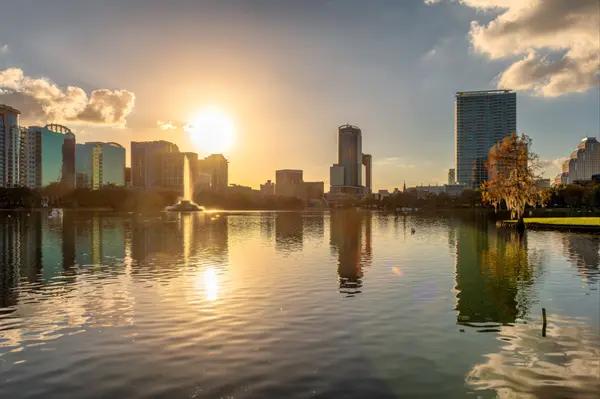
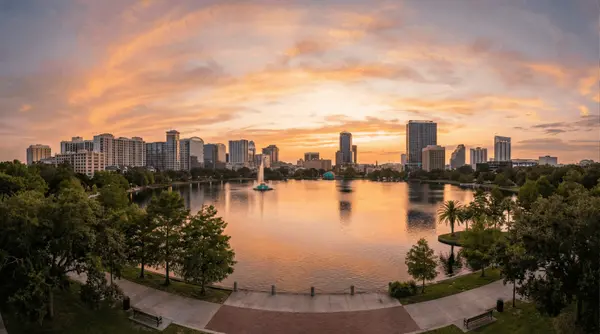
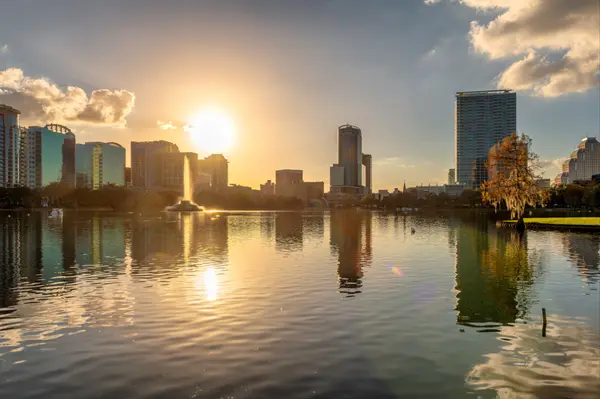
- Lake Eola refurbishment — $31M+ overhaul of Orlando's most iconic park, including LED amphitheater canopy, new walkways, water features, and a transformed entry corridor
- Orlando Magic Sports & Entertainment District — a long-awaited mixed-use project including a 261-room full-service hotel, residential units, office space, retail, a 3,500-capacity event venue, and parking
- 550 SHA apartment complex — 223 residential units with ground-floor commercial space featuring a food hall concept
- 33-story mixed-use tower at Church and Pine — luxury hotel, JW Marriott branded residences, condominiums, and penthouse units with rooftop garden
Hospitality and luxury hotel projects
- Multiple new luxury hotel projects across the metro (Dr. Phillips area, downtown, theme park corridor)
- Continued expansion at Universal with Epic Universe driving major hospitality demand around the I-Drive area
- InterContinental Hotel announced for the Universal area (700 rooms)
Infrastructure projects
- Billions in active road projects across Central Florida
- Sunbridge Parkway extension connecting Orange and Osceola counties
- State Road 534 (Osceola Parkway extension) — 14-mile limited-access toll road
- Continued Brightline expansion potential to Tampa
- Ongoing Terminal C expansion at Orlando International Airport
What are the best areas to live in Orlando?
This is where Orlando's diversity becomes its biggest strength. The metro is large enough that you can find very different lifestyles within a 30-minute drive of each other:
Best for established walkability
Winter Park — historic, walkable, restaurant-heavy, expensive. Park Avenue is one of Florida's best walkable downtowns.
Best for new construction and families
Horizon West (Winter Garden / Hamlin / Summerlake) — newer master-planned communities with A-rated schools and strong family infrastructure.
Best for tech, medical, and walkable suburban living
Lake Nona — Tavistock's flagship community. Medical City, USTA, Laureate Park's walkable town center. Premium pricing reflects premium amenities.
Best for affordable suburban with growth potential
Clermont — Lake County's growth engine. More affordable than Orange County, family-oriented, growing fast.
Best for early-stage master-planned community
Sunbridge (Weslyn Park, Del Webb) — the next Tavistock community in St. Cloud. Earlier in its lifecycle than Lake Nona, with significant price discount as a result.
Best for downtown urban energy
Thornton Park / Lake Eola / SODO — the actual urban core, condos and townhomes, proximity to Lake Eola Park and Orlando's emerging dining scene.
Should I move to Orlando?
Honest framework. Orlando is a great fit if:
- You work remote or in healthcare, defense, aerospace, tech, or other higher-wage sectors
- You value diverse housing options across very different community types
- You want no state income tax and lower taxes than coastal markets
- You enjoy theme parks, food culture, sports, or year-round outdoor activity
- You're moving from California, New York, DC, or coastal Florida and your dollar will stretch further
- You're a long-term thinker comfortable with a growing market that's still maturing
Orlando is a harder fit if:
- You depend on hospitality wages and have no second income source
- You need world-class public transit and walkable urbanism as a baseline
- You can't tolerate Florida summers, hurricane risk, or high humidity
- You're sensitive to high home insurance costs
- You're moving from a low-cost-of-living Midwest market and expect equivalent pricing — Orlando is not that anymore
How do I figure out which Orlando area is right for me?
This is what I help relocators with every week. The mistake most newcomers make is picking a neighborhood based on what they saw in a YouTube video or a friend's recommendation, only to realize three months later that the area doesn't match their actual lifestyle, commute, or budget.
📋 Take the Orlando Personality Quiz here: [INSERT YOUR QUIZ LINK] — it'll help you narrow Orlando down to the 2–3 areas that genuinely fit your situation, instead of you spending months trying to figure it out.
📩 Or email me directly at info@orlandowithmario.com if you'd rather start with a conversation. I work with relocators across every Orlando submarket and I'd rather help you find the right area than sell you the wrong one.
🎥 Watch the original video this guide is based on: [INSERT YOUR YOUTUBE VIDEO URL]
Frequently asked questions about moving to Orlando
Is Orlando a good city for young professionals?
Yes, especially in higher-wage industries (tech, healthcare, defense, remote work). The median age is 35.3 and 48% of the population is 25–54, so young professionals are the dominant demographic. Areas like Lake Nona, downtown, and Winter Park are particularly strong for this group.
Is Orlando a good place to retire?
It can be, but Orlando is less retiree-dominated than people assume. If you want active 55+ communities, places like Del Webb Sunbridge and Del Webb Oasis (Winter Garden) are purpose-built for this. If you want walkability and culture, Winter Park is excellent. If you want lower cost, Clermont and Lake County offer more value.
Is Orlando better than Tampa or Miami?
Different, not better. Tampa offers Gulf Coast beaches and a less theme-park-driven economy. Miami offers international culture and ocean lifestyle but at significantly higher cost and complexity. Orlando offers central Florida positioning, the lowest cost among the three major Florida metros, and strong inland geography (less hurricane storm-surge risk than coastal cities).
What's the worst part of living in Orlando?
Honestly: traffic and the wage-to-cost ratio in tourism-heavy roles. Both are real and shouldn't be glossed over by anyone selling you on the city.
What's the best part of living in Orlando?
For most newcomers: the diversity of neighborhood options. Orlando is large enough that you can choose your lifestyle — established walkable downtown, new construction master-planned suburb, lakefront luxury, affordable family community — within one metro. That's rare for a city this size.
Is Orlando getting better or worse?
Genuinely better in most measurable ways — job growth, GDP growth, airport modernization, new urban projects, expanding economic diversity, dining scene maturity, transit (Brightline). Worse in some legitimate areas — traffic congestion, insurance costs, housing affordability versus pre-2020. The trend lines on most fundamentals are positive.
Is now a good time to buy a home in Orlando?
It depends on your timeline. Short-term (1–3 years): mixed, given current rate environment and slowing price growth. Long-term (5+ years): yes, given Orlando's continued growth as the #1 fastest-growing major metro. Real estate decisions should be made on personal timing more than market timing for most buyers.
Final thoughts
Orlando isn't perfect. No city is. But the data — #1 in job growth, #1 in population growth, #1 in GDP growth among major U.S. metros — tells a clear story: this is one of the most economically vibrant cities in America right now. The challenges are real (wages, infrastructure, transit), and they shouldn't be ignored. But the trajectory is positive, the diversity of communities is rare, and the pieces of a truly great city are increasingly in place.
If you're considering a move here, the question isn't really "is Orlando a good city?" The question is "is Orlando a good fit for me?" That's a different question, and it deserves a real answer based on your specific lifestyle, career, budget, and priorities. That's the conversation I'd want to have with you — and it starts with the quiz.
Recent Posts