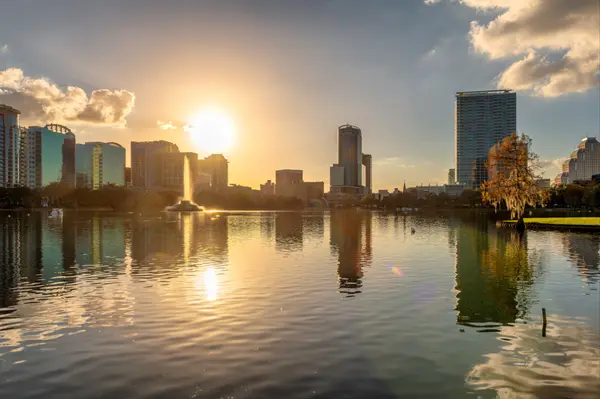
Downtown Orlando in 2026: Westcourt, iVerse, JW Marriott, and the Renaissance Decoded
TL;DR — The downtown Orlando renaissance, decoded
Downtown Orlando is in the middle of one of the most ambitious transformation periods in its modern history. Multiple projects with valuations between $100 million and $500 million are reshaping the urban core: Westcourt ($500M next to Kia Center), the JW Marriott Hotel/Convention Center & Residences (33-story tower on Church Street), iVerse ($100M+ entertainment district concept), The Canopy ($25-30M public space under I-4), Phase 3 of the Dr. Phillips Center ($175M outdoor performance venue), plus food-focused projects like the 550 Shoma tower and the Bumby Arcade Food Hall.
The challenges are real — safety perceptions, mobility, and the lingering effect of vacant lots — but the city has implemented concrete initiatives to address them, and crime data following the SAFE program rollout shows measurable improvement. For anyone considering buying or investing in downtown Orlando, the next 5–10 years are likely to deliver more visible change than the last 25 combined.
Why downtown Orlando matters for buyers and investors in 2026
Most relocators write off downtown Orlando as either "the place I drive past on I-4" or "the bar district near Kia Center." Both framings miss what's actually happening here in 2026. Downtown Orlando is in the middle of a major reset — a wave of capital investment, public infrastructure improvements, and reimagined public space that's genuinely changing the character of the urban core.
This guide is the honest agent's perspective on the challenges downtown is working through, the major projects underway or in the works, and what it all means if you're considering buying a condo, investing in the area, or just trying to understand whether downtown is becoming something worth visiting again.
What are the biggest challenges facing downtown Orlando today?
Before talking about the exciting development pipeline, it's worth being honest about what the city is actually working to fix. Recent surveys conducted as part of the State of Downtown process surfaced consistent themes from residents and visitors.
Is downtown Orlando safe?
Safety perception has been one of the most-discussed downtown issues in recent years. The city has responded with a few specific initiatives:
- The SAFE Program — A grant and incentive program that helps business owners (especially in the entertainment district) install security infrastructure. For entertainment-classification businesses, that includes ID scanners, metal detection, and other entry security. For other businesses, the program supports security camera installation.
- Special permits and police presence requirements — Businesses operating past certain hours in the entertainment district now require special permits and must contribute to the cost of police presence. There's been real debate between business owners and the city over the logistics of this, but according to coverage in the Orlando Business Journal, crime rates in the affected core area showed measurable improvement in the year following implementation.
- Increased police visibility overall. Walking through downtown today, you typically can't go far without seeing a patrol car or officer on a bike. Whether that's holiday-season-driven or a permanent change, the visible presence is meaningfully higher than it was 2–3 years ago.
The honest read: downtown is in a noticeably better place on safety than it was in 2022–2023, but this is an ongoing process, not a solved problem.
What about mobility and getting around downtown?
Mobility has been the second-biggest theme in feedback from residents and visitors. The improvements underway fall into three categories:
1. Ride DTO via the Ride Circuit app. A $1 ride service that operates from 8:00 AM to 8:00 PM throughout the downtown core. The app shows real-time busy/quiet status. It's a small thing in isolation, but it dramatically lowers the friction of moving between downtown destinations without driving.
2. Roadway conversions tied to the DTO Action Plan. Two major changes that have been in the works for years are coming to fruition recently:
- Magnolia Avenue is being converted to a two-way street (from one-way)
- Orange Avenue is converting from three southbound lanes to one lane in each direction with a center turn lane
Both changes serve two goals: enhance commercial visibility for downtown businesses (one-way streets historically hide retail) and reduce the unnecessary loop-around traffic created when drivers can't make a direct turn back to where they wanted to go.
3. Vacant lot beautification and transitional public spaces. Downtown still has multiple vacant or underutilized parcels. The city is taking a two-track approach: some lots are slated for major vertical development (the projects below), while others are being beautified with seating, landscaping, art installations, and public-realm improvements.
Major downtown Orlando development projects to watch in 2026
What is The Canopy in downtown Orlando?
The Canopy is a planned public space activation under I-4 connecting toward Kia Center and Church Street. It's an estimated $25–30 million project including seating, landscaping, art installations, and parking. The Canopy is one of multiple "transitional space" beautification projects rolling out across the downtown core, including improvements outlined in the Lake Eola Master Plan.
Why it matters: I-4 has historically been a psychological wall that splits downtown. Activating the space underneath it doesn't eliminate the highway, but it dramatically softens the impact and creates a destination out of what was previously dead space.
What is Westcourt in downtown Orlando?
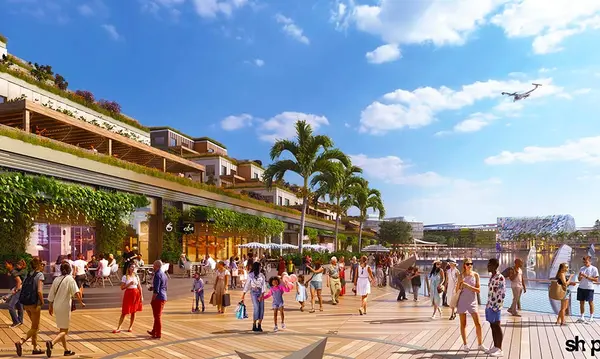
Westcourt is the most consequential downtown Orlando development of the next several years. A $500 million, 1+ million square foot mixed-use project on 8.5 acres directly adjacent to the Kia Center, developed by JMA Ventures, Machete Group, the DeVos family, and the Orlando Magic.
What's included:
- 11-story Kimpton Hotel with 261 rooms — Kimpton's first Orlando location, featuring an outdoor lounge, pool deck, marquee restaurant, and 16,000 square feet of meeting space
- 265 multifamily rental units stacked above the hotel
- Up to 300,000 square feet of Class A office space, with 30% pre-committed and a 17,000 sq ft rooftop amenity including a 6,000 sq ft glass-enclosed event space
- 120,000–125,000 square feet of retail focused on entertainment and dining
- 3,500-capacity live event venue
- 1,140-space parking garage
- Festival plaza space with 1.5 acres of outdoor common areas
The project received land-use entitlements in April 2024. Per recent reporting, completion is targeted for March 2027 and the project is expected to bring approximately 3,400 jobs to the local community.
What is iVerse in downtown Orlando?
iVerse is a downtown Orlando entertainment district concept being developed by Ovais Jalil, the entrepreneur behind Debonair Supper Club. Per public statements from the iVerse legal team, the project is currently scoped as a $100 million specialty-use real estate development, with the broader vision potentially scaling significantly larger over a 5–10 year timeline.
The vision includes:
- High-end retail, including new-to-market brands
- An entertainment venue similar in concept to the Las Vegas Sphere
- A bowling alley
- An arcade with a futuristic twist (VR, AI integration)
- A private wellness club, potentially with pickleball
- A major public art installation
Jalil has publicly described the vision as a "Rockefeller Center for Orlando." The project is currently in earlier stages of development than Westcourt or the JW Marriott — closer to ideation and entitlement than construction — but it's a serious entry from a developer with a track record of delivering on ambitious downtown concepts (Debonair).
What is the JW Marriott in downtown Orlando?
The JW Marriott Hotel/Convention Center & Residences is a 33-story luxury tower planned for 319 East Church Street, anchoring the corner of Church and Pine. Designed by DLR Group and developed by Summa Development Group, the tower is set to rise 328 feet above ground (423 feet above mean sea level) — making it one of the tallest projects in downtown's pipeline despite the airport-related height restrictions in the area.
What's included:
- 228 hotel rooms
- 129 condominiums
- Two restaurants
- Convention center
- Integrated parking garage
- 60,000+ square feet of indoor and outdoor meeting space
- Sky Club on the 33rd floor
- Pool and spa on the 10th floor
- Rooftop garden
FAA permits were filed in mid-2024. Construction was anticipated to begin in late 2024 or early 2025 — worth confirming current status before publishing, as projects of this scale frequently shift timelines.
What is Phase 3 of the Dr. Phillips Center?
The Dr. Phillips Center is already one of downtown Orlando's defining venues. Phase 3 expands it dramatically with an outdoor activation that includes:
- Outdoor performance auditorium hosting up to 7,000 guests
- 12,000–14,000 square foot immersive performance venue
- 10,000 square foot event, banquet, and exhibition space
The estimated cost is $175 million, with the Center seeking $145 million from the Orange County Tourist Development Tax. The current Front Yard Festival running during the holiday season is essentially a preview of the kind of outdoor activation Phase 3 will support year-round.
What food and dining projects are coming to downtown Orlando?
Per the most recent State of Downtown address, food was emphasized as one of the most important grounding forces for an urban core — what brings people in initially and what keeps them coming back across generations. Jason Chin, a panelist at the address, was Orlando's first James Beard finalist and now owns four restaurants in the area, including a recently opened Italian spot.
The food-focused projects in the development pipeline:
550 Shoma. A 16-story tower in the heart of downtown with 223 residential units and 11,000 square feet of ground-floor retail expected to include a food hall. Adds both density and a new food destination to the urban core.
Bumby Arcade Food Hall. A multi-vendor food hall on Church Street, currently in progress. Will include 18 separate retail spaces ranging from 300 to 1,000 square feet — a substantial food hall featuring coffee shops, restaurants, cocktail bars, and ample seating.
Westcourt's retail and dining component. The 120,000+ square feet of retail at Westcourt is specifically focused on entertainment and dining, with the goal of being the dominant entertainment, shopping, and dining destination in the urban core.
Are other tall buildings being added to the downtown Orlando skyline?
Yes. Beyond the JW Marriott, several other towers are in various stages of development:
- The V
- The Edge at Church Street (currently in progress)
- The 33-story JW Marriott (the largest of the proposed projects)
Downtown Orlando does have building height restrictions because of proximity to Orlando Executive Airport, but multiple projects are still pushing the upper limits of what's allowed and will visibly change the skyline over the next 3–5 years.
What does all this mean if you're buying real estate in downtown Orlando?
Is downtown Orlando a good place to buy a condo or invest?
Long-term, the case is strong. The combination of $1+ billion in announced and in-progress investment, public-realm improvements (The Canopy, Lake Eola Master Plan, roadway conversions), and concrete safety improvements is the kind of mix that historically drives meaningful urban appreciation. Downtown condos and lofts that are reasonably priced today are likely to benefit from the broader area transformation over the next 5–10 years.
Short-term, it's still a more nuanced market than the suburban Orlando submarkets. Downtown has higher HOA fees, different financing requirements (some downtown condo buildings are not warrantable for traditional 30-year conventional loans), and pricing that varies dramatically building-to-building.
Who should consider buying in downtown Orlando?
Buyers who fit at least one of these profiles:
- You want walkable urban living and are tired of suburban commutes
- You work downtown or have flexibility on commute
- You value entertainment, dining, and cultural amenities at your doorstep
- You're a long-term holder comfortable with 5+ year horizons for the area transformation to play out
- You're priced out of Winter Park and want walkable urbanism at a more accessible price point
- You're investing in rental property aimed at young professionals, traveling nurses, or short-term corporate housing
Who should NOT buy in downtown Orlando?
- Buyers with school-age kids who prioritize traditional A-rated suburban schools
- Buyers who need quiet residential streets and don't want event-night noise
- Buyers who can't get comfortable with the current safety perception while improvements continue rolling out
- Short-term flippers expecting 12-month gains
How do I figure out if downtown Orlando is right for me?
Downtown Orlando in 2026 is genuinely in the middle of becoming something it hasn't been before. For the right buyer — and especially for long-term holders who can see the trajectory of the major projects in the pipeline — this is one of the more interesting urban opportunities in Central Florida. For the wrong buyer, the area's still-maturing nature and ongoing fixes will feel like compromises rather than upside.
📋 Take the Orlando Personality Quiz here: https://orlandowithmario.com/QUIZ — it'll help clarify whether downtown urban living, suburban master-planned community life, or something else fits you best.
📩 Or email me directly at info@orlandowithmario.com if you'd rather start with a conversation. I help buyers across every Orlando submarket think through these decisions, and downtown is a market where the right local guidance materially affects outcomes.
🎥 Watch the original video this guide is based on: https://www.youtube.com/watch?v=yQO3-BOVFD0
Frequently asked questions about downtown Orlando in 2026
Is downtown Orlando getting better?
Yes, by most measurable indicators. Crime data has shown improvement following the SAFE program rollout. Mobility infrastructure (Magnolia and Orange Avenue conversions, Ride DTO) is improving. Major capital projects ($1+ billion combined) are moving from planning to construction. The trajectory is clearly positive — though the area is still in transition, not yet at its destination.
What is the SAFE program in downtown Orlando?
The SAFE program is a city-supported initiative providing financial incentives to downtown business owners — particularly in the entertainment district — to install security infrastructure including ID scanners, metal detection, and security cameras. The program has been credited with measurable crime rate improvement in the entertainment core in its first year.
What is Westcourt in Orlando?
Westcourt is a $500 million mixed-use development on 8.5 acres adjacent to the Kia Center. It includes a 261-room Kimpton Hotel, 265 residential units, 300,000 sq ft of office space, 120,000+ sq ft of entertainment-focused retail, a 3,500-capacity live event venue, and 1,140 parking spaces. It's developed by JMA Ventures, Machete Group, the DeVos family, and the Orlando Magic, with target completion in March 2027.
What is iVerse in downtown Orlando?
iVerse is a downtown Orlando entertainment district being developed by Debonair Supper Club founder Ovais Jalil. Currently scoped as a $100 million specialty-use real estate development, the broader concept includes high-end retail, a Sphere-inspired entertainment venue, bowling, an AI/VR-integrated arcade, a wellness club, and major public art. Jalil has described the vision as "Rockefeller Center for Orlando."
What is The Canopy in Orlando?
The Canopy is a $25–30 million planned public space activation under I-4 in downtown Orlando, connecting toward the Kia Center and Church Street. It will include seating, landscaping, art installations, and parking — transforming previously dead urban space into a destination.
What is the Bumby Arcade Food Hall?
The Bumby Arcade Food Hall is a multi-vendor food hall on Church Street, currently in progress. It will include 18 separate retail spaces ranging from 300 to 1,000 sq ft, featuring coffee shops, restaurants, cocktail bars, and ample seating.
What is the JW Marriott tower in Orlando?
The JW Marriott Hotel/Convention Center & Residences is a 33-story tower planned for 319 East Church Street, designed by DLR Group and developed by Summa Development Group. It will include 228 hotel rooms, 129 condominiums, two restaurants, a convention center, 60,000+ sq ft of meeting space, a 33rd-floor Sky Club, and a 10th-floor pool and spa.
Is downtown Orlando walkable?
Partially, and increasingly so. Downtown's core (Lake Eola, Church Street, Orange Avenue, Magnolia Avenue, Thornton Park) is genuinely walkable today. The roadway conversions, public space activations, and wave of new mixed-use development are deliberately designed to expand walkability. By 2030, downtown's walkable footprint will likely be meaningfully larger than it is today.
Why are projects taking so long in downtown Orlando?
Major urban development projects routinely take 5–10 years from announcement to completion. Land assembly, entitlements, financing, design, permitting, and construction all add time. Westcourt's 2027 completion timeline is actually fast for a $500M, 1M+ sq ft project. Projects like iVerse and Phase 3 of the Dr. Phillips Center are on longer timelines because of their scale and funding complexity.
What's the biggest opportunity in downtown Orlando real estate?
Honestly, the most undervalued opportunity in 2026 is probably condos and lofts in buildings within walking distance of Westcourt and the Kia Center. As Westcourt completes in 2027 and the surrounding area continues to mature, residential proximity to that level of entertainment and dining infrastructure will likely command meaningful premiums. Buyers who get in before the area's full transformation are positioning ahead of the curve.
Final thoughts
I made a separate video about Orange Code and Vision 2050, the broader code structure changes that affect how Orange County and downtown Orlando develop over the next 25 years. If you're seriously interested in how the city builds going forward, that context matters too — and it ties directly into a lot of what's happening downtown.
The honest take on downtown Orlando in 2026: there's a lot of work being done, and a lot of work still ahead. The challenges are real — safety, mobility, the legacy of vacant lots — but the city is doing something instead of nothing, and the projects in the pipeline are some of the most ambitious in downtown's modern history. For buyers, investors, or just locals who want to understand what's coming, the trajectory is genuinely positive.
What do you think downtown needs for a true renaissance? What projects would you most want to see come to life? Drop a thought in the comments — I read them all.
Recent Posts