Orlando Vision 2050 and Orange Code Explained: What's Adopted, What's Frozen, and What It Means for Buyers
TL;DR — What's actually happening with Vision 2050 and Orange Code
Orange County's 25-year growth plan, called Vision 2050, and its accompanying zoning rewrite, called Orange Code, were officially adopted by the Board of County Commissioners on June 3, 2025, after eight years of work. They were designed to push Orlando away from car-centric sprawl and toward walkable, mixed-use, sustainable development.
Less than two months later — on July 28, 2025 — the Florida Department of Commerce declared Vision 2050 "null and void" under a new state law (Senate Bill 180) that restricts local governments from adopting rules considered "more restrictive or burdensome" than what existed prior to August 2024. As of early 2026, the previous comprehensive plan, Destination 2030, remains in effect for all land use, zoning, and development matters. Orange County has joined more than two dozen Florida jurisdictions in a class-action lawsuit challenging SB 180.
For Orlando residents and anyone considering a move to Central Florida, this matters. The blueprint exists. The political fight over it is just beginning. Here's the honest agent's perspective on what it means.
What is Orange County Vision 2050?
Vision 2050 is Orange County's long-term comprehensive plan — a roughly 615-page document that guides how and where the county should grow over the next 25–30 years. It replaces (or attempts to replace) the previous comprehensive plan, Destination 2030, which was adopted in 2009.
What was Destination 2030 and why did Orange County replace it?
Destination 2030 was a use-based plan: certain areas zoned for housing, others for commercial, others for industrial. The result over the past 16 years has been classic urban sprawl — Orlando keeps extending further and further out, with new subdivisions, new strip retail, new arterial roads, repeating outward into rural land.
The county acknowledged that the old framework wasn't keeping up with how Orlando is actually changing. The metro is now the #1 fastest-growing major U.S. region, and the existing plan didn't have tools to handle that growth in a sustainable way.
What does Vision 2050 propose to do differently?
Vision 2050 introduces a fundamentally different planning approach: context-sensitive, form-based planning. Instead of dictating "this is a residential zone, this is a commercial zone," the plan organizes the county into three place types:
- Centers — denser, mixed-use cores designed for walkability and transit
- Neighborhoods — residential areas with appropriate context (urban, suburban, or rural)
- Corridors — major roadways being reimagined for mixed-use, transit-friendly development
The plan explicitly aims to push more than 40% of Orange County's future growth into already-developed areas — primarily near downtown Orlando, the I-Drive tourism corridor, the Lake Nona area, and around UCF — while protecting rural lands and established suburban neighborhoods from further sprawl.
What is Orange Code?
If Vision 2050 is the what, Orange Code is the how.
Orange Code is the new land development code that translates Vision 2050's goals into actual zoning rules. It replaces a use-based zoning system that had been largely in place since 1957, with only incremental updates over the decades. The previous code had roughly 35 zoning districts spread across about 1,200 pages. Orange Code reduces this to approximately 400 pages and uses form-based zoning instead.
What is form-based zoning?
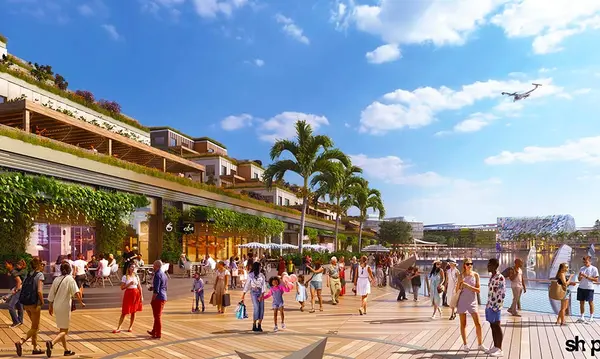
Form-based zoning regulates buildings based on what they look and feel like — their size, scale, frontage, and relationship to streets — rather than their intended use. The result, in theory: more flexibility for mixed uses, more attractive streetscapes, and built environments that prioritize pedestrians and walkability over cars.
Orange Code is, by some accounts, the largest form-based code ever adopted in the United States by population, covering approximately 900,000 residents in unincorporated Orange County.
What are the goals of Orange Code in practice?
The code's stated purpose includes a striking line on page 15: "to reduce sprawl and improve the built environment to permit the ordinary activities of daily life to occur within walking distance of most dwellings as much as feasibly possible, allowing independence to those who do not drive."
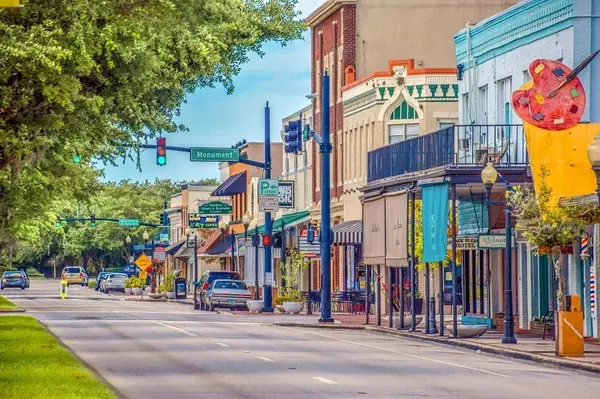
Imagine Orlando neighborhoods designed so a meaningful share of daily life — groceries, coffee, a meal out, a visit with friends — could happen on foot or by transit instead of by car. That's the long-term vision Orange Code is trying to enable. Baldwin Park is often cited as a Central Florida example of this kind of neighborhood already done well.
Why was Vision 2050 declared null and void?
This is the part of the story most Orlando residents don't know yet — and it materially affects how this plan plays out.
On July 28, 2025, less than two months after the Board of County Commissioners formally adopted Vision 2050, the Florida Department of Commerce sent Orange County a letter declaring the plan "null and void." The reason: a new state law called Senate Bill 180 (Chapter 2025-190 of the Florida Statutes), signed by Governor Ron DeSantis in June 2025.
What is Florida Senate Bill 180?
SB 180 was framed as a hurricane-recovery and emergency-management bill. Among its provisions: it prevents local governments within 100 miles of a hurricane's path or in federally declared disaster areas from adopting any development rules deemed "more restrictive or burdensome" than what was on the books before August 1, 2024. The restrictions stay in place until October 1, 2027.
The Department of Commerce identified at least 10 specific policies in Vision 2050 that it said violated this provision, with another 4 flagged as potentially problematic — including, notably, a policy directing bicycle paths to be separated from roadways whenever possible. The state's reading: any policy that adds requirements developers didn't have to follow before is "more restrictive."
Is Orange County fighting back?
Yes. Orange County has joined more than two dozen other Florida jurisdictions in a class-action lawsuit challenging SB 180. County leaders have publicly stated their intent to defend home-rule authority over local land use planning. The county's planning department is also working directly with the Department of Commerce to amend the flagged policies and salvage the rest of Vision 2050.
In the meantime, the previous comprehensive plan (Destination 2030) and the previous land development code remain in effect for all land use, zoning, and development decisions in unincorporated Orange County. Orange Code has not yet taken effect as the county originally intended.
How does Vision 2050 affect housing in Orlando?
Will Vision 2050 increase affordable housing?
That was the intention. One of Vision 2050's clearest priorities was diversifying housing types beyond the dominant single-family home. The plan and Orange Code together would have allowed more "missing middle" housing: townhomes, duplexes, triplexes, smaller multifamily buildings — the housing types that fill the gap between single-family homes and large apartment complexes.
Orange County's housing affordability problem is real. Median home prices have risen significantly since 2020, and the gap between hospitality wages and housing costs has widened. The plan aimed to help by enabling smaller, denser, more affordable housing types in walkable contexts — alongside continued single-family construction.
What about luxury housing in Orlando?
Orlando has simultaneously become a meaningful luxury market. The metro is now ranked among the top in the country for fastest-growing population of millionaire homeowners. New ultra-luxury communities have been announced or are under development — including ambitious branded residences and resort-adjacent estates that would have been hard to imagine in Orlando 10 years ago. Vision 2050 doesn't restrict luxury — it just tries to ensure the market also delivers walkable, mixed-income, missing-middle options.
How does Vision 2050 affect transportation in Orlando?
Will Orlando become less car-centric?
Slowly, and unevenly. Orange Code introduces the concept of "complete streets" — designing roadways for everyone, not just drivers. That includes protected pedestrian crossings, dedicated cycling infrastructure, transit accommodation, and street trees and shade for walkability in Florida heat.
Even with Vision 2050 currently null and void, several transportation initiatives continue to move forward independently:
- $4.2 billion 5-year work plan approved by the Central Florida Expressway Authority for 2026–2030, adding 23 new miles of expressway
- Sunshine Corridor study — $6 million approved to study expanded transit between downtown Orlando, the convention center area, and possibly the airport, including a Brightline lane to Tampa
- Brightline expansion — current connection from Orlando to Miami via high-speed rail, with future Tampa expansion under study
- Active road projects in Osceola, Lake, and Orange counties totaling billions in infrastructure investment
How long until Orlando feels less sprawled?
Generations, honestly. Even if Vision 2050 is fully restored tomorrow, the physical infrastructure of Orlando's existing sprawl — the wide arterials, the disconnected subdivisions, the strip retail — doesn't change overnight. Form-based codes apply to new development and major redevelopments. Existing neighborhoods stay essentially as they are.
What changes faster: the new construction now happening in places like downtown Orlando, Lake Nona, Hamlin in Horizon West, and the I-Drive corridor. Those areas were already trending walkable before Vision 2050 — and the plan would have accelerated that trend.
How does Vision 2050 affect Orlando's economy?
Is the Orlando job market changing?
Yes — in a meaningful way that's somewhat independent of Vision 2050 but reinforces its assumptions about Orlando's future.
Leisure and hospitality has been Orlando's dominant employment sector for decades, and it remains huge. But the metro now ranks #2 in the nation for tech-job employment gains, with the tech workforce approaching 80,000 employees and contributing roughly $15 billion to the local economy. Professional and business services has overtaken leisure and hospitality as the largest sector in Orlando's employment mix in recent data.
What is NeoCity and why does it matter?
NeoCity is a new technology district focused on semiconductor and advanced manufacturing in Osceola County. It has attracted hundreds of millions in investment and is drawing companies internationally to relocate or open Central Florida operations. It represents a deliberate, public-private push to diversify Orlando's economy beyond tourism.
Combined with Lake Nona's Medical City, the defense-contractor presence (Lockheed Martin and others), and continued growth in healthcare (AdventHealth is now Orlando's #2 employer), Orlando is genuinely becoming a more economically diversified metro. The shift matters because higher-wage industries can sustain higher-density, walkable, well-amenitized communities — exactly what Vision 2050 envisioned.
What does Vision 2050 mean for Orlando home buyers?
Practical implications for someone considering buying in Orange County:
If you're buying in already-built neighborhoods
Existing Planned Developments (PDs) and Planned Unit Developments (PUDs) are vested in perpetuity. Whatever Vision 2050 ends up looking like once amended, your existing neighborhood's character is unlikely to change dramatically. Established communities like Lake Nona's Laureate Park, Baldwin Park, Horizon West neighborhoods, and Winter Park stay as they are.
If you're buying in growth corridors
Areas explicitly targeted for transformation — downtown Orlando, near UCF, along Semoran Boulevard, and the I-Drive corridor — could see meaningful changes if Vision 2050 (or a revised version) is eventually approved. That likely means more density, more mixed-use, more walkability. It also likely means rising property values in those areas as walkability commands a premium.
If you're buying in rural areas
Vision 2050 explicitly tried to protect rural and natural areas from development. Even with the plan currently null and void, voter-approved measures like Charter Amendment 9 (which established an urban growth boundary in 2024 with 73% voter support) signal strong public will to keep rural land rural. The political pressure to protect these areas isn't going away.
If you're buying new construction
Watch for builders adapting to the form-based code direction, even if Vision 2050 is in flux. The smartest new master-planned communities in Central Florida (Sunbridge, parts of Lake Nona, Hamlin/Hamlin Town Center) are already designed with walkability and mixed-use in mind because the market is rewarding it. Builders read the trend lines.
How do I figure out which Orlando area fits my future?
Vision 2050 is going to keep evolving. The political fight will continue. Some neighborhoods will change a lot over the next 10–25 years, others almost not at all. The question for any buyer isn't "is Orlando getting better?" — it's "which part of Orlando matches the life I actually want to live?"
📋 Take the Orlando Personality Quiz here: https://orlandowithmario.com/QUIZ— it'll point you to the Orlando areas that match your lifestyle, budget, and priorities, instead of you trying to figure out which corner of a 4,000-square-mile metro fits you.
📩 Or email me directly at info@orlandowithmario.com if you'd rather start with a conversation. I track these planning developments closely and help relocators navigate Orlando's current and future growth corridors every week.
🎥 Watch the original video this guide is based on: https://www.youtube.com/watch?v=XPmbmtL4CgA
Frequently asked questions about Vision 2050 and Orange Code
When was Vision 2050 adopted?
Vision 2050 was adopted by the Orange County Board of County Commissioners on June 3, 2025, by a 5-2 vote, after roughly eight years of planning work.
Is Vision 2050 currently in effect?
No. The Florida Department of Commerce declared the plan "null and void" on July 28, 2025, citing conflicts with Senate Bill 180. The previous comprehensive plan, Destination 2030, remains in effect for all land use, zoning, and development matters in Orange County until further notice.
What is Senate Bill 180?
SB 180 (Chapter 2025-190 of the Florida Statutes) is a state law signed by Governor Ron DeSantis in June 2025. It prevents local governments within 100 miles of a hurricane's path or in federally declared disaster areas from adopting development rules deemed "more restrictive or burdensome" than rules in effect before August 1, 2024. The restrictions stay in place until October 1, 2027.
Is Orange County suing Florida over SB 180?
Yes. Orange County has joined more than two dozen other Florida jurisdictions in a class-action lawsuit challenging certain provisions of SB 180.
What is form-based zoning?
Form-based zoning regulates buildings based on their physical form (size, scale, frontage, relationship to streets) rather than their intended use. It generally allows more mixed uses and emphasizes walkable, pedestrian-oriented design over single-use zoning that produces sprawl.
What is Orange Code?
Orange Code is Orange County's new form-based land development code, adopted alongside Vision 2050 on June 3, 2025. It replaces the previous code that had been substantially in place since 1957. By population, it may be the largest form-based code ever adopted in the United States.
What's Orange County's previous comprehensive plan called?
Destination 2030, adopted in 2009. It remains the operating plan as of early 2026 while Vision 2050 is null and void.
Where will most of Orange County's growth happen?
Per Vision 2050's framework: more than 40% of future population growth is targeted for downtown Orlando, the I-Drive tourism corridor, the Lake Nona area, and around UCF. Even with the plan currently invalidated, market trends are already pushing growth toward these areas.
Will Orlando have better public transit?
Slowly. Brightline already connects Orlando to Miami. The Sunshine Corridor study (approved with $6 million) is examining expanded transit including a possible Brightline lane to Tampa. SunRail and LYNX continue to operate but are limited compared to peer metros. Vision 2050's complete streets framework would have accelerated transit and pedestrian infrastructure if it were in effect.
What is NeoCity?
NeoCity is a new technology district in Osceola County focused on semiconductor and advanced manufacturing. It represents Central Florida's deliberate push to diversify its economy beyond tourism.
Final thoughts
The story of Vision 2050 is genuinely the story of Orlando's future being negotiated in real time — between local government and state government, between developers and residents, between progress and preservation. There's no clean ending yet. The plan exists. It's been formally adopted. It's also currently null and void. And it's being fought over in court and at the negotiating table.
Whatever version of Vision 2050 ultimately governs Orange County, the underlying trends are clear: Orlando is growing fast, the population is diversifying, the economy is shifting toward higher-wage sectors, and the market is increasingly rewarding walkable, mixed-use, well-amenitized communities. Whether by code or by market, that's the direction Orlando is moving.
The job for any buyer or future resident isn't to predict the politics. It's to understand which Orlando neighborhood, today, fits their actual lifestyle — knowing that some areas will transform significantly over the next 25 years and others won't change much at all. That's the real conversation worth having.
Recent Posts